
Get more! Sign up for PLANSPONSOR newsletters.
Opinions November 19, 2026
Trust Is Not a Retention Strategy
A plan designed to support participants through retirement will need new measurements of success and potentially different plan features, writes Allspring Global Investments’ head of retirement.

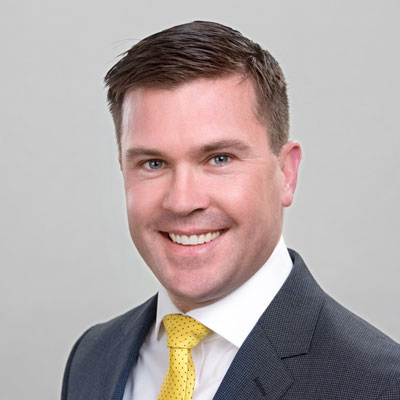
Nate Miles
For decades, the employer-sponsored community’s definition of retirement plan success has largely been measured by participation rates, savings rates and account balances. Those metrics remain critically important. But as defined contribution plans continue to mature and participants reach retirement with larger account balances than ever before, plan sponsors face a different question:
What Happens After Participants Retire?
The answer may be surprising.
Our recent research, conducted in conjunction with the Retirement Research Center at DCIIA, shows that while 70% of participants trust their employer at least “somewhat” when it comes to retirement plan design, 56% of near-retirees still expect to move their workplace retirement savings elsewhere once they leave the workforce. This is evidenced by defined contribution rollovers to IRAs outpacing roll-ins by roughly nine to one.
In other words, trust and retention are not the same thing.
Many participants appreciate and value the retirement benefits their employer provides throughout their careers. Yet when retirement arrives, they often view leaving the plan as the default next step. The decision to roll assets elsewhere is frequently driven less by dissatisfaction and more by habit, marketing influence, adviser relationships, or the perception that the plan’s role ends once employment does.
For plan sponsors, that distinction matters.
Trust Doesn’t Determine the Outcome
It is tempting to view participant trust as evidence that retirees will naturally remain in the plan. The data suggest otherwise.
Participants may trust their employer’s judgment, but retirement decisions ultimately hinge on practical considerations: cost, flexibility, access to retirement-focused investment solutions, withdrawal capabilities and ongoing guidance. As participants move into their 50s, they are entering their peak planning years when their financial life becomes most complex and the value of advice is potentially at its highest. And while they may have been in defined contribution plans for 20 or more years, they have often never actively engaged and may not associate their added need for guidance with a plan that, through defaults, got them to where they are.
Sponsors therefore face an important strategic choice. Should the retirement plan be designed simply to help participants accumulate assets during their working years? Or should it continue serving them throughout retirement?
The answer influences nearly every major plan design decision.
Before Choosing Solutions, Choose an Objective
The industry often focuses first on evaluating specific features such as retirement income products, managed accounts, advice programs, guaranteed solutions or rollover strategies. But those discussions can put the cart before the horse.
Before assessing any solution, sponsors should first determine what they want their plan to accomplish.
Broadly speaking, plans tend to fall into one of three categories.
The Accumulation Plan
For many organizations, the primary objective remains straightforward: help employees save effectively during their careers and provide an orderly transition when they retire or separate from service.
There is nothing wrong with this approach. In fact, it remains appropriate for many plans.
If accumulation is the primary goal, success should be measured by participation, contribution rates, investment outcomes, and retirement readiness rather than by postretirement asset retention.
The “To-and-Through” Plan
Other sponsors are expanding their vision.
Rather than viewing retirement as the natural endpoint of an employer’s relationship with a participant, these plans are designed to support participants both before and during retirement. Investment solutions, withdrawal programs, retirement income tools and guidance capabilities become integral components of the participant experience.
In this model, retaining assets may not be the primary objective, but it becomes a natural consequence of providing meaningful value after retirement.
The Outcome-Oriented Plan
A growing number of sponsors are thinking even more broadly.
These plans seek to help participants optimize all aspects of retirement decision-making, encouraging retirement plan asset consolidation and capturing participant-specific information. The plan will often include more investment options geared toward growth, inflation protection and income while offering education, tools and services to help participants manage tax efficiency, spending strategies and overall retirement security.
Increasingly, that requires helping participants view retirement planning holistically rather than through the lens of a single account.
The goal is not simply to maximize balances. It is to improve outcomes.
The Next Era of DC May Be Defined by Retirement
When available, the employer-sponsored defined contribution system has been remarkably successful at helping Americans build retirement savings. But the next phase of the industry’s evolution will likely focus on helping participants spend their savings effectively.
That shift requires sponsors to think differently.
A plan designed solely for accumulation may serve participants exceptionally well throughout their careers while still expecting assets to leave at retirement. A plan designed to support participants through retirement will require different capabilities, different measurements of success and potentially different plan features.
Neither approach is inherently better.
What matters is intentionality.
Too often, plans operate somewhere in the middle, hoping participants will stay without offering a compelling reason to do so. Yet, participants are making deliberate decisions. If they are evaluating cost, flexibility, income solutions and guidance, sponsors should be equally deliberate about defining the role their plan is intended to play.
Trust has already been earned.
The question now is whether the plan delivers enough value in retirement to make participants want to stay.
Read the complete study results here: 2026 Retirement Study | Allspring Global Investments.
Nate Miles is the head of retirement at Allspring Global Investments.
This feature is to provide general information only, does not constitute legal or tax advice, and cannot be used or substituted for legal or tax advice. Any opinions of the author do not necessarily reflect the stance of ISS STOXX or its affiliates.




« Morningstar Researchers Make Case for More Automatic Retirement Savings