
Chief Human Resources Officer
-
Location:Washington, D.C.
-
Industry:Nonprofit
-
Plan(s) Offered:401(k); defined benefit
-
Plan Assets:401(k) – $1.1B
-
Number of Participants:401(k) – 3,751
-
DC Plan Participation Rate:96.2%
-
DC Plan Average Deferral Rate:11%
-
Automatic Enrollment:Yes
-
Automatic Escalation:Yes
-
Default Deferral Rate for Auto-Enrollment:5%
-
Default Investment Fund:T. Rowe Price target-date fund
-
DC Plan Employer Contribution:100% of 3% + 50% of next 2%
-
Recordkeeper:T. Rowe Price Retirement Plan Services Inc.
-
Plan Adviser:Willis Towers Watson
-
Financial Wellness Educator(s):CAPTRUST
The AARP, an interest group for Americans age 50-plus, modernized its 401(k) plan to improve participant outcomes and strengthen fiduciary oversight. The sponsor removed an annuity as the default payout, thus eliminating most spousal consent requirements and enabling faster access to savings. The plan allows terminated employees to roll external retirement assets into the plan, allowing those ex-employees to consolidate their savings and access lower-cost institutional investments. Installment payment options were expanded from a single 10-year schedule to flexible periods of up to 25 years. Employees may also purchase annuities outside the plan, and new providers offer personalized financial and investment guidance.
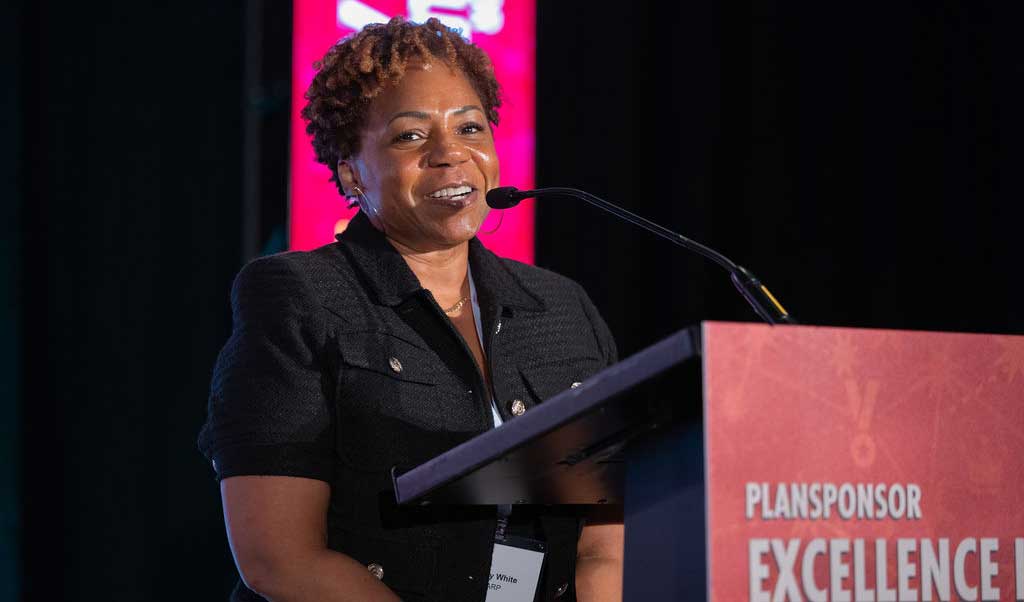
Lesley White, director, benefits, AARP
To get to know them better, PLANSPONSOR sent the 2026 Plan Sponsor of the Year winners a list of questions from which to choose four to answer. Below are responses from Lesley White, director of benefits, on behalf of AARP.
PLANSPONSOR: How does your organization’s leadership approach its commitment to employee retirement readiness and financial well-being?
AARP: AARP’s leadership demonstrates a strong, fiduciary-driven commitment to retirement readiness and financial well-being, supported by active governance and mission alignment. The AARP Benefits Committee serves as plan administrator and named fiduciary, ensuring consistent oversight of plan design, compliance and participant outcomes.
Our approach is shaped by a diverse population that includes active employees and both pre-65 and post-65 retirees, requiring we have a lifecycle view of financial security that extends from accumulation through retirement. Leadership prioritizes plan features such as automatic enrollment and automatic escalation to drive saving behavior, while also evaluating how to better support retirement income decisions.
Our retirement readiness focus is further integrated into a broader financial well-being strategy, reflecting AARP’s commitment to financial resilience and long-term security.
PLANSPONSOR: What do you foresee as the most significant opportunity—or challenge—for plan sponsors in helping employees achieve long-term financial security?
AARP: The most significant opportunity—and challenge—for plan sponsors is helping employees translate retirement savings into sustainable income.
While tools like auto-enrollment have improved participation, many participants still struggle with the transition from accumulation to spending. AARP’s experience reflects this broader trend: Our plan effectively supports asset growth, but participants often leave the plan at retirement due to limited in-plan income solutions.
At the same time, increasingly diverse workforce demographics require more personalized, lifecycle-oriented approaches. With AARP’s population spanning active employees, caregivers and retirees across multiple age groups, that reinforces the need for flexible strategies.
This creates a clear opportunity for plan sponsors to expand beyond accumulation, integrating retirement plans with education, tools and income-focused solutions that better support long-term financial security.
PLANSPONSOR: What aspect of your retirement plan offering are you most proud of?
AARP: We are most proud of delivering a retirement program that combines strong savings outcomes with a mission-driven, lifecycle approach.
Our defined contribution plan is designed to help employees build meaningful retirement savings, supported by auto-enrollment and -escalation, among other features, as well as strong fiduciary governance through our benefits committee.
What differentiates our program is how it reflects our workforce and mission. With a population that includes active employees and retirees, we focus on the entire retirement journey, not just accumulation, but the transition to retirement.
We are also proud of how our program continues to evolve, particularly our focus on enhancing support for retirement income decisions and long-term financial security.
PLANSPONSOR: What advice you would offer to other plan sponsors aiming to improve employee financial well-being or retirement readiness?
AARP: Design for the full financial lifecycle—not just how employees save, but how they achieve long-term financial security.
Many organizations have successfully improved participation and saving through plan design features such as auto-enrollment. At AARP, these tools have been effective in helping employees build retirement assets. However, accumulation alone is not enough; participants often lack the tools or confidence to manage their assets in retirement.
Plan sponsors should broaden their focus to include education, guidance and solutions that support retirement income and decisionmaking. This is especially important for organizations with diverse populations spanning multiple life stages.
Ultimately, the most effective strategies are those that meet employees where they are and guide them through increasingly complex financial decisions over time.
 Get the latest news every weekday