Never miss a story — sign up for PLANSPONSOR newsletters to keep up on the latest retirement plan benefits news.
Thought Leadership June 12, 2025
Implications of Demographic Shifts for Retirement Plan Sponsors
An expert from Massachusetts Mutual Life Insurance Company talks about the implications of shifting demographics in the U.S. and how plan sponsors can address them to provide better outcomes for participants.
Sponsored by MassMutual
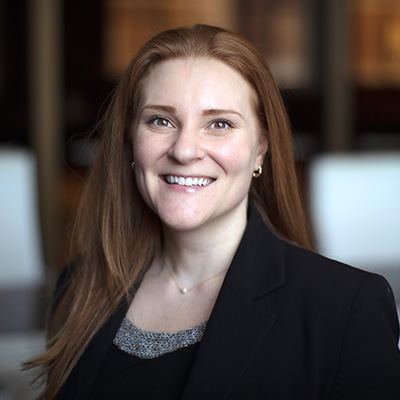
Diana Schneider
Increasing longevity, combined with changes in historical behaviors across generations, is influencing how individuals think about aging and planning careers. Diana Schneider, Head of Institutional Solutions at MassMutual, says this is influencing the way individuals think about retirement planning and has implications for plan sponsors. Schneider explains there will be changes in the way people retire.
“For one, because people can be healthier for longer, they may work longer, phase in retirement or even start a new career later in life,” she says. “The industry also needs to be tracking the development of the ‘sandwich generation.’ Younger adults are sometimes delaying careers or living with parents for longer, and older adults are living longer. This can put financial pressure on the middle generations to support both parents and children simultaneously.”
For employers, Schneider highlights three implications.
“With a smaller proportion of the population of working age, there may be a scarcity of talent that we haven’t had to contend with in recent history,” she says. “That could put pressure on employers to offer improved benefit packages to attract and retain talent, and that, of course, will include focusing specifically on retirement plans and benefits.”
Secondly, Schneider says, as the proportion of employees at or near retirement grows and retirement account balances expand, plan sponsors may need to dedicate more time and resources to risk management and plan funding techniques. She also says sponsors may want to consider the investment options available in their plan to ensure they fit more complex retirement planning approaches.
“The equation is more complicated now that retirement could be later, or longer,” Schneider says. “Participants could be supporting not only themselves, but children and parents, with that retirement income, or they might have another income stream that becomes available after they retire, because they’ve started a new role or career.”
Schneider notes that these considerations have impacted the development and use of financial products and services. For defined contribution plans, products are evolving to meet the needs of different generations, and they will continue to evolve with more options for stability and income protection, she says. For defined benefit plans, sponsors are thinking about how longer lifespans will impact funding.
“We have seen many DB plan sponsors move to liability-driven-investing strategies to stabilize funding levels, but longer lifespans have emphasized the value of other de-risking strategies, such as pension risk transfers,” Schneider says.
She recommends plan sponsors look for long-term partners that can help navigate these trends and the resulting risks. In addition, Schneider says, plan sponsors should look for providers that are keeping up with technology.
“This is a generation of retirees that is more technologically savvy and demanding new approaches to help them manage their retirement,” she says. “That’s something that accelerated during COVID—older adults leveraging technologies that they may never have used before to stay in touch with their families or have groceries delivered to the door. We are seeing that wave of technological adaptation play through the retirement space as well, putting new demands on providers.”
MassMutual offers several solutions to help plan sponsors address and manage upcoming demographic changes, according to Schneider.
“First, we offer stable value investments1 within plan that can provide more predictable returns with principal protection and complement growth-oriented investment strategies,” she says. “That’s one solution that can enhance what plan sponsors are offering and allow retirees more confidence in the stability of outcomes as they look to stretch retirement balances.”
For DB plans, MassMutual has been in the pension risk transfer market business for several decades, Schneider notes.
“That’s a solution that can be incredibly helpful for institutions that are facing larger pension liabilities and thinking about managing the resulting longevity risk,” she says. “If employers can transfer the longevity risk to an insurer that’s very well-equipped to manage it, that allows them to refocus their time, attention and resources on their core business.”
MassMutual also offers corporate- and bank-owned life insurance that “can be an efficient option to informally fund employee benefit obligations employers use to help retain key talent,” Schneider says.
“All these solutions can be helpful for employers that are looking to have benefit offerings that they can use to help retain top talent,” Schneider concludes. “The nice thing about these solutions is they are customizable and can flex over time as demographics change and the needs of sponsors grow and shift.” — Rebecca Moore
1MassMutual® Stable Value Investments is the marketing name of a Massachusetts Mutual Life Insurance Company business team. The stable value insurance contracts offered are issued by Massachusetts Mutual Life Insurance Company Springfield MA 01111-0001.
Insurance products issued by Massachusetts Mutual Life Insurance Company (MassMutual) (Springfield, MA 01111) and its subsidiaries, C.M. Life Insurance Co. and MML Bay State Life Insurance Co. (Enfield, CT 06082).C.M. Life Insurance Co. and MML Bay State Life Insurance Co., are non-admitted in New York.
MM202805-312594
Sponsored by

« Helping Plan Sponsors Power Retirement Readiness for Middle America