Get more! Sign up for PLANSPONSOR newsletters.
Compliance April 25, 2025
Tools and Techniques to Navigate the Fiduciary Landscape
Rick Funston, CEO of Funston Advisory Services, talks through how public plan fiduciaries can prepare for and manage an increasingly complex pension world.
Reported by
Amy Resnick

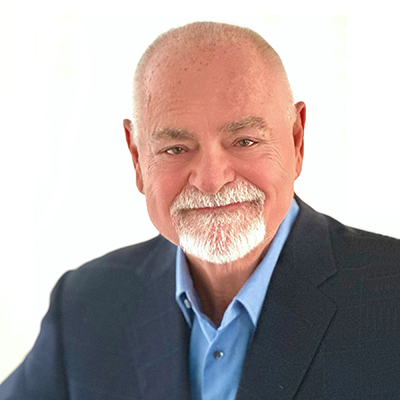
Rick Funston
Rick Funston is a consultant and an author with more than 50 years of experience working in governance and risk, especially for public pension fund trustees and other public and private boards. He was the editor of and a primary contributor to “One of a Kind! A Practical Guide for 21st Century Public Pension Trustees,” published in 2017. His latest book, written with Jon Lukomnik, is “Adapt or Fail! A 5×5 Governance Framework for Boards of Directors,” published in March.
Funston spoke to PLANSPONSOR Executive Editor Amy Resnick about how to be a fiduciary, what boards need to do their jobs well and what kinds of education, training and development are available to help. The interview was edited for clarity and concision.
PLANSPONSOR: Rick, what are, in your mind, the core fiduciary duties?
FUNSTON: Well, the three core fiduciary duties are: loyalty to what’s in the best interests of a plan’s participants and beneficiaries; second is the duty of prudence, which is to show care and thought and really be able to demonstrate that; and then third is to comply with laws and plan documents.
PLANSPONSOR: As a plan fiduciary, what are the key governance and fiduciary responsibilities?
FUNSTON: Well, they relate to the duties, of course, but the challenge is always trying to determine what’s in in the best interest of the plan participants and the beneficiaries, and that includes intergenerational equity, along with a number of other common-law duties.
[Fiduciaries have] a responsibility to take into account all of the stakeholders’ points of view, but then you have to determine what’s best and who decides what’s best.
You can say you’re going to maximize it for the stakeholder group that you may believe are your constituents. But then the question becomes: What’s best in the short- and long-term interest of all plan participants, both active and retired, today and in the future? How do you do that? How do you determine what’s best?
I think one of the interesting differences between public retirement systems and Taft-Hartley plans is that Taft-Hartley plans are evenly split in their composition between labor and management. So when it comes to deciding what’s best, if they disagree, if they’re deadlocked, they actually have built-in mechanisms for mediation and arbitration.
In a public retirement system, you have an uneven number, when we’re talking about fiduciary boards, as opposed to sole fiduciaries, which is a whole other discussion. Most systems really don’t have an agreed-upon process for prudence and determining what’s in the best interest [of participants and beneficiaries.] There’s no systematic way of doing that.
PLANSPONSOR: You mentioned a phrase that I think is important to understand, so I want to go back to it for a second. Can you discuss the question of intergenerational equity? What is it and how should fiduciaries understand it?
FUNSTON: This is where you have the differences in interest between those who are current, active members who may not be eligible for their retirement, let’s say, for 25 years. They could be contributing to a plan that, because of other factors, is actually being diminished so that it’ll end up being a first-in, first-out [situation], which is the characteristic of a Ponzi scheme.
So how do you protect people who, in good faith, are making contributions today for their retirement security in the future to [a retirement plan] that may not be financially sound if it can’t make it between now and then? That’s the intergenerational equity that we’re talking about.
Typically, the benefits themselves are the result of collective-bargaining agreements and so on. But there are other decisions: For example, in terms of setting the assumed rate of return. If you set it very high, then it shows a very optimistic potential outcome.
Expected rate of return [for public plans] has been coming down and down, but those who continue to keep it high are basically shifting the [pension obligation] to future generations, because if the expected rate of return doesn’t materialize, then they’re going to have to increase contributions by both the employer and the employee.
So when people are appointed to a fiduciary board, or as they continue to serve on a fiduciary board, what kinds of board education and training and development are necessary and what is available?
There needs to be, obviously, an onboarding process, and the problem with onboarding processes as related to fiduciary responsibility is that fiduciary responsibility is immediate. There is no forgiveness period. As soon as [a board member] sits in that seat and takes the oath, they are immediately responsible.
So how do you give them a way of knowing what questions to ask, versus trying to give them all the information all at once?
PLANSPONSOR: Can you give an example?
FUNSTON: The example that I often use is [that becoming a public plan fiduciary] is like getting a 1,000-piece puzzle that’s kind of scattered all over the tabletop. But it doesn’t come with a picture on the top of the box that tells you what it looks like when it’s assembled.
Because there is no organizing framework in terms of governance.
When people talk about the duties [of a fiduciary], they don’t really talk about how you fulfill those duties. That’s one of the things that I talk about in the book, which is that if you have these three fiduciary duties, how are you supposed to fulfill those?
PLANSPONSOR: Can we go back to the problem of onboarding?
FUNSTON: There’s an onboarding session, which takes place, typically, in the offices of the [public pension] system, and the board members may come in for two or three hours where they get the [board] book and they get to drink from the firehose.
Then they are left with, “If you have any questions, give us a call.”
They get all the policies, all the procedures, all the legislative documents—everything—all bundled into one, with no way of understanding: How does that apply to me?
PLANSPONSOR: Does that result in board members deferring to the judgment of staff?
FUNSTON: Or they end up relying on other board members, and naturally, there are personality differences between board members. So it is better to equip them with the questions and where to find the answers, as opposed to trying to give them all of the answers. So that’s one element of it.
Then the other element of it is [training], some kind of onboarding program, both at the basic and at the intermediate levels.
PLANSPONSOR: How long does it take for a new fiduciary to be equipped and educated up to a beginner level?
FUNSTON: I think it can take up to two years.
Remember that they meet on average six or seven times a year. Some meet monthly, some meet quarterly. But if you assume that they come together for that period of time, they’re getting very brief exposures to one another.
Another good way for them to learn is they should all be given a list of questions. If you’re a member of the audit committee, here’s 10 questions you should always ask; if you’re a member of the investment and risk committee, here’s 10 questions you should ask of internal audit, and so on. If you’re a member of the benefits committee, here’s 10 questions you should have. That makes it easier. That kind of primes the pump, and it’s OK to ask these questions.
PLANSPONSOR: What about mentoring for fiduciaries?
FUNSTON: There is a mechanism of shadowing an experienced trustee. I know that in some cases, where there’s a planned succession in terms of trustees—for example, within a union—a replacement member would actually be shadowing them for a year and learning the ropes and making sure that they’re ready.
There’s going to be a learning curve for everybody, and obviously it depends on how much time they’re willing to spend, because everyone has to remember that these are part-time volunteers that have day jobs. It’s very hard to compete for their time and attention.
My favorite quote is: “Life is short; art, long; opportunity, fleeting; experience, misleading; judgment, difficult,” and that kind of sums it up for being a fiduciary.
PLANSPONSOR: How can a trustee know if the plan is in compliance and managing risks?
FUNSTON: It’s not easy.
Just take, for example, the issue of assuming that it’s an integrated board—in other words, it has both investment and benefits. If you look at the amount of information that’s typically presented to the board, there are the rows and columns. Here’s the asset class, and then here’s since inception, one, three, five and ten years, right? You have to look at every row and every column, and then the question is: Well, what does it mean?
Almost all of the information that gets presented to them stays at the information level, and it’s growing and growing and growing. You can do the same thing for compliance, and you can do the same thing for benefits, if you have to.
This is why we recommend to clients that if you’re going to create a dashboard and provide a more insightful way of getting information to the board members, then you really have to start with your investment policy statement, because that’s the foundational document that says, ‘Here’s what we hope to achieve, and these are our expectations.’
The problem is, from a board’s perspective, what is vital and how do they never lose sight of what’s really vital? Funded status and financial soundness, right? The problem has been that most of the information just simply is aggregated data that’s presented to them.
The analogy that I use is like: The investment specialist presents the information in the same way as if a conductor comes out and reads the audience the sheet music.
PLANSPONSOR: What would be missed in the performance if that were the case?
FUNSTON: [They might miss information about what] current performance suggests. “Should we continue to stay the course, adjust course or change course?” That’s the question that the board should be asking.
PLANSPONSOR: So what decision-making processes do you recommend to help trustees exercise their duty of prudence?
FUNSTON: What I’ve done is I’ve developed a series of questions. Prudence relies on the process of asking the questions. Always be asking and answering these questions:
- What’s the issue?
- How long has it been an issue?
- Who’s affected by the issue?
- How many people are affected?
- Who are the key stakeholders that are affected by it?
- What are the options that are available to us, from the least we could do to the most we could do? and
- What are the related pros and cons, as seen by each of the various stakeholder groups?
Which goes right back to: How do we determine what’s in the best interest of plan participants and beneficiaries? Are you now in a position to make an informed decision? That’s why the board needs to have decision discipline.
PLANSPONSOR : What is decision discipline?
FUNSTON: It really begins with signal detection. How do you detect a signal from a lot of background noise about what’s truly vital?
The next step then, is pattern recognition. What is the signature of a threat or an opportunity?
Then the third step in the process is: What are the options that are available to us, from the least we could do to the most we could do, again in intelligence?
Then there’s a learning step: What worked well and what didn’t work so well?
Then, how do we adapt?
Rinse and repeat. The process of continuous improvement and developing a decision discipline really needs to be embedded.
PLANSPONSOR: How does all of this translate when you’re talking about investment performance and selection?
FUNSTON: The problem with a lot of investment policy statements is they aren’t that strong. They deal with certain things, but not with others, right?
In many cases, they don’t actually establish what the tolerances are for how much variability they’re willing to accept—Is that performance right? Is it unacceptably different from what you expected?—That’s the risk. That it isn’t within the range of what you expected.
Then the question is, “What contributed to that?” The key is, of course, to choose the right metric to begin with.
So if you go back to the investment performance, not only should you be asking questions about, well, “How are we allocating the assets?” but “What benchmarks are we choosing?” And then, “How is compensation tied to that?”
Those are questions that the board should be asking.
PLANSPONSOR: How granularly should fiduciaries be looking at risk?
FUNSTON: Well, in typical consultant terms, it depends. But generally speaking, the more often that they try to change course strategically, the worse their performance is.
So if you are a patient, long-term investor, as they are and ought to be, the question really comes down to: “What are the policy implications of this performance if we take a shock in a particular area?” Well, the whole portfolio should be designed to be more shock-resilient, right?
But I think, ultimately, it comes down to whether the CIO and the investment consultant recommend to them whether they should stay the course, tweak it or change course, and it shouldn’t be that often, right?
They all need to understand and they need to be kept informed, but they need to be informed with the perspective of the long-term frame of things.
PLANSPONSOR: How important is process?
FUNSTON: I think that that’s what I’m referring to: Having discipline will help you make better decisions faster, because there’s a way of doing it.
For example, let’s say a request comes to the board for its approval of something, and the board should have already predefined the things that need to come to its attention. Certain things will be defined in legislation, others will be a matter of policy.
But what they should also be saying is: If you’re going to come to the board and request our approval, then you need to be able to demonstrate the process of due diligence that you’ve gone through to bring this recommendation to us, first through the committee and then at the board overall.
So have you done the legal, operational, financial due diligence that is necessary for us to approve this, as opposed to presenting something as, “Here’s a budget. Please approve.”
[A board should also] require a kind of a definition of what the due diligence is that needs to be demonstrated, because if a decision gets revisited later, then you’ve got your track record again to be able to demonstrate prudence in approving this decision, this acquisition, whatever [the board] did.
[You can say,] “This is what we took into account,” because they get into trouble when they can’t clearly show that.
The byword today is transparency. How can you be transparent?
 |
ERISA Rules of the Road |
 |
Does Outsourcing Impact the Need for Fiduciary Education? |
 |
Fiduciary Basics for New Plan Sponsors |
 |
More Fiduciary Basics |
« Retirement Confidence Remains High Despite Concerns About Inflation, Social Security